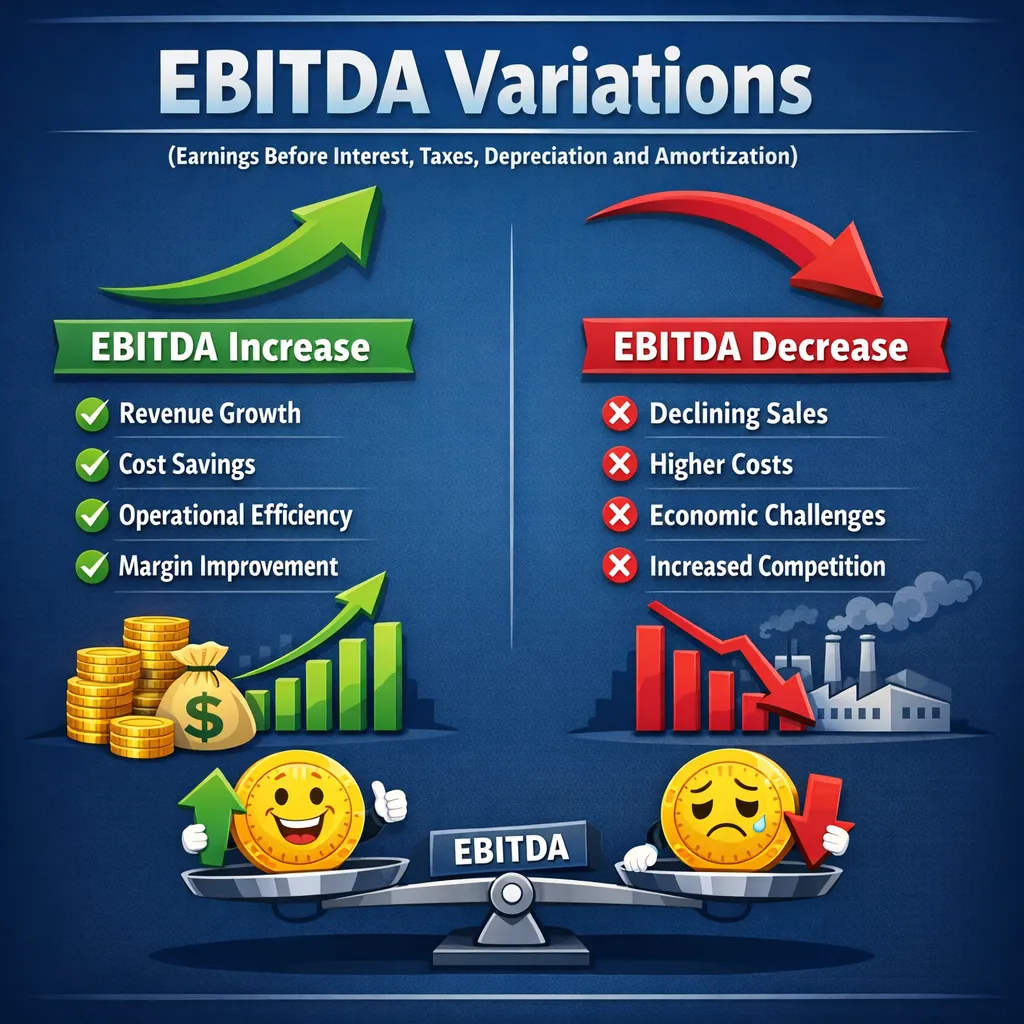
Why the Same EBITDA Is Worth Different Amounts in Different Sectors: Understanding UK SME Valuation Multiples
A business generating £400k of normalised EBITDA might sell for £1.6m in one sector and £2.8m in another. The earnings figure is identical. The quality of those earnings — their sustainability, their growth trajectory, their risk profile — may be similar. But the multiple applied differs by 75%. Why?
The answer lies in how buyers assess the structural characteristics of different sectors — the growth dynamics, the competitive barriers, the revenue model, the capital requirements, and the depth of the buyer universe for businesses operating in each one. Understanding those dynamics is not just academic. For business owners approaching exit, it is directly relevant to both the preparation work they should do and the realistic expectations they should have about the price their business will command. For buyers, it is essential context for evaluating whether the multiple being asked for a specific business reflects genuine sector characteristics or seller optimism.
This post examines the key factors that drive multiple variation across UK SME sectors and gives a practical framework for understanding where any specific business sits within its sector's valuation range.
Why Multiples Vary Between Sectors — The Core Logic
EBITDA multiples are a compressed expression of a buyer's assessment of risk and return. A higher multiple means the buyer is confident that the earnings are high-quality, sustainable, and likely to grow — and that the risk of those earnings deteriorating is low. A lower multiple means the buyer sees more risk, less certainty, or less growth potential, and requires a lower entry price to generate an acceptable return.
Sector affects almost every dimension of this risk-return calculation:
Growth rate — sectors with structural growth tailwinds produce businesses whose earnings are expected to increase over the hold period, which justifies a higher entry multiple
Recurring revenue potential — sectors where businesses can build subscription, retainer, or contracted revenue bases are inherently lower-risk than sectors where revenue is entirely transactional and must be re-won continuously
Capital intensity — sectors requiring significant ongoing capital expenditure to maintain earnings consume cash that the EBITDA figure does not reflect, reducing the free cash flow available to service acquisition debt and return equity
Competitive barriers — sectors where established businesses have meaningful moats — whether through regulation, specialisation, brand, switching costs, or network effects — are more defensible and therefore command higher multiples than sectors where new competition can emerge quickly
Buyer universe depth — some sectors attract a wide range of potential buyers including trade acquirers, private equity, and acquisition entrepreneurs; others have a narrow buyer universe that reduces competitive tension in any sale process and therefore compresses achievable multiples
Cyclicality — businesses in sectors whose performance is tightly correlated with the economic cycle carry more risk than businesses in sectors that demonstrate consistent performance through economic downturns
High-Multiple Sectors in the UK SME Market
These are the sectors where well-run SME businesses most consistently command premium valuations in the current UK market.
Technology and software
Software businesses — particularly those with SaaS or subscription revenue models — attract the highest multiples in the SME market, often 6x to 10x EBITDA or higher for businesses with strong recurring revenue, high retention rates, and genuine product differentiation. The logic is straightforward: high-quality, sticky, recurring revenue with low marginal cost of delivery is the best revenue model in existence. Buyers pay accordingly.
The important qualification: not all technology businesses are software businesses, and not all software businesses are SaaS businesses. A bespoke software development firm that bills time and materials and has no recurring revenue element is not a SaaS business, and should not expect SaaS multiples. The distinction between genuine recurring software revenue and project-based technology services is the most important valuation judgement in the technology sector.
Professional services with contracted revenue
Accountancy, legal, financial advisory, HR, and compliance-focused professional services businesses — particularly those where a significant proportion of revenue is under retainer or managed service contracts — command multiples in the 4x to 6x range for well-run SMEs. The contracted revenue element, the high barriers to client switching after genuine relationship investment, and the relatively low capital requirements of a service business all support premium valuations.
The multiple discount applies quickly when the revenue becomes more transactional, when client concentration is high, or when the key relationships sit with individual fee-earners rather than with the firm as an institution. The transition from professional services to personal practice — which characterises many small professional firms — is a valuation distinction that buyers understand clearly and price accordingly.
Healthcare and life sciences services
Healthcare services — including private clinical services, occupational health, specialist therapy, and diagnostics — benefit from strong structural demand growth, regulatory barriers to entry, and in many cases contractual or framework revenue from NHS or corporate clients. Multiples of 5x to 8x are achievable for well-positioned businesses with diversified revenue bases and CQC registration or equivalent regulatory compliance.
The risks that compress multiples in this sector: single-site businesses with regulatory renewal risk, businesses heavily dependent on a small number of clinicians who may not stay post-acquisition, and businesses where the majority of revenue comes from a single NHS contract that is subject to retendering.
Business services with high switching costs
Facilities management, specialist outsourced services, and niche business process outsourcing businesses — particularly those where the cost of switching provider is genuinely high for the customer — command solid multiples in the 3.5x to 4.5x range. The switching cost dynamic creates revenue visibility and reduces churn risk, which buyers value significantly.
Mid-Range Multiple Sectors
These sectors represent the broad middle of the UK SME valuation market — businesses that are valued on a straightforward EBITDA multiple basis, typically in the 3x to 5x range, with the specific multiple determined primarily by business quality rather than sector premium.
Manufacturing and engineering
Manufacturing businesses attract multiples that vary widely — from 2.5x for commodity manufacturers with limited differentiation to 5x or above for specialist manufacturers with proprietary products, significant intellectual property, or genuinely defensible niche market positions. The capital intensity of manufacturing — the ongoing requirement to invest in plant, equipment, and working capital — means that free cash flow is typically lower relative to EBITDA than in service businesses, which should be reflected in any investment model.
The key valuation drivers in manufacturing: proprietary products versus contract manufacturing, the defensibility of the customer relationships, the age and condition of the production assets, and the degree to which production capability is dependent on specific individuals.
Specialist trade services
Skilled trade businesses — electrical, mechanical, plumbing, HVAC, specialist construction — command multiples in the 3x to 5x range, with the upper end reserved for businesses with significant recurring maintenance or service contract revenue, multi-regional operations that reduce geographic concentration risk, and management teams that demonstrate genuine operational independence from the owner.
The valuation challenge in trade services is almost always the same: the owner is typically the most skilled operative in the business, the most important customer relationships are personal rather than institutional, and the business model often produces excellent earnings but in a form that is difficult to transfer cleanly. Buyers understand this and price it.
Retail and consumer
Retail and consumer businesses — with the exception of those with strong proprietary brands, genuine online scalability, or unique market positioning — tend to attract modest multiples, typically 2.5x to 4x, reflecting the competitive intensity of most retail markets, the capital requirements of inventory and premises, and the susceptibility to consumer spending cycles. The businesses that command better multiples in this sector are those with genuine brand differentiation, subscription or membership elements, or direct-to-consumer channels that reduce dependence on third-party retailers.
Lower-Multiple Sectors and the Reasons Why
Hospitality and leisure
Restaurants, cafes, pubs, and most hospitality businesses are valued primarily on an EBITDA multiple basis, but at the lower end — typically 2.5x to 4x — reflecting the high labour intensity, the premises dependency, the sensitivity to consumer confidence, and the relatively low barriers to competition. The specific characteristics that attract buyers at the upper end of this range: strong brand recognition, scalable formats, significant property ownership, or management contracts and franchise arrangements that reduce operational risk.
Recruitment and staffing
Recruitment businesses are valued at 3x to 5x EBITDA, with the multiple influenced strongly by the split between permanent placement fees (transactional, re-won each time) and temporary or contract staffing income (more recurring but lower margin). Businesses heavily reliant on permanent placement revenue are valued more cautiously because that income disappears entirely in a hiring freeze, which the UK market has experienced at several points in recent years.
Construction and property services
General construction businesses — those without a specialist positioning, significant framework contract revenue, or meaningful recurring maintenance income — tend to attract multiples in the 2.5x to 4x range, reflecting working capital volatility, contract risk, and the cyclical nature of new build activity. Specialist subcontractors with genuine technical differentiation, long-term framework relationships, or significant recurring maintenance programmes can achieve materially better multiples.
The Within-Sector Multiple Range — What Drives It
Every sector has a multiple range, not a single point. Within any sector, the specific multiple a business commands is determined by the same quality factors we have covered throughout this blog — revenue quality, earnings consistency, operational independence, customer concentration, and scalability. A business at the top of its sector's range has addressed all five. A business at the bottom has significant work remaining.
The practical implication: for a business owner thinking about exit, the most important valuation question is not what sector multiple applies to my business. It is where within my sector's range my business sits — and what the specific changes required to move it from the lower end to the upper end are. That gap analysis is far more actionable than a generic sector comparison, and it is the work that produces the best exit outcomes.
Our guide covering the seven valuation destroyers identifies the specific characteristics that drag any business below its sector's upper multiple range. The preparation work that addresses those destroyers is the same work that moves a business towards the top of its range.
A Note on Multiple Compression in the Current Market
The multiples described in this post reflect the current UK SME market in 2025. They are materially lower across most sectors than the multiples that prevailed in 2021 and early 2022, when cheap debt, abundant private equity capital, and compressed risk pricing produced a brief period of elevated valuations that many business owners still use as their reference point.
The correction has been significant and is largely complete. Sellers who are pricing their businesses based on 2021 market data are mispricing them for the current environment. Buyers who expect the multiple compression to continue significantly from here are likely being overly cautious. The current market, for well-prepared businesses in the right sectors, offers genuine transaction activity at multiples that are historically reasonable — not the peak of the recent cycle, but not distressed either.
Understanding where the current market sits — sector by sector, and for any specific business — is part of what a frank pre-sale valuation conversation with an experienced adviser provides. Download the Business Valuation Playbook for a structured framework on how to assess the quality factors that determine where within a sector's multiple range any specific business should be positioned.
Download the Business Valuation Playbook at www.DealwiseAdvisory.co.uk
Contact Steve at [email protected] for a frank valuation discussion about your business
WhatsApp Steve on +44 7930-857243